


Vietnam offers a wide range of golf experiences, from mountain-backed layouts in the north to coastal courses in Central Vietnam and resort golf in the south. For a first-time visitor, however, choosing where to play is only one part of the planning process.
The distances between destinations, regional weather patterns, airport procedures and local traffic can all affect the journey. Travelers searching for a suitable travel agency Vietnam visitors can use for local sightseeing may also want to coordinate those activities around their confirmed tee times rather than treating golf and travel as two separate plans.
This guide covers the practical decisions first-time golfers should make before arriving in Vietnam.
Choose One or Two Golf Regions
A common mistake is trying to play in Hanoi, Danang, Nha Trang, Ho Chi Minh City and Phu Quoc during the same short vacation. Vietnam is a long country, and its golf destinations are separated by considerable distances.
For a trip of seven days, select one main region. With ten to fourteen days, combining two regions is more comfortable. Covering the north, center and south becomes reasonable only when the trip is long enough to include rest and travel days.
Hanoi and Northern Vietnam
Northern Vietnam suits golfers who want to combine varied landscapes with Hanoi’s history and food culture. Courses around the capital may feature lakes, forested hills or mountain views.
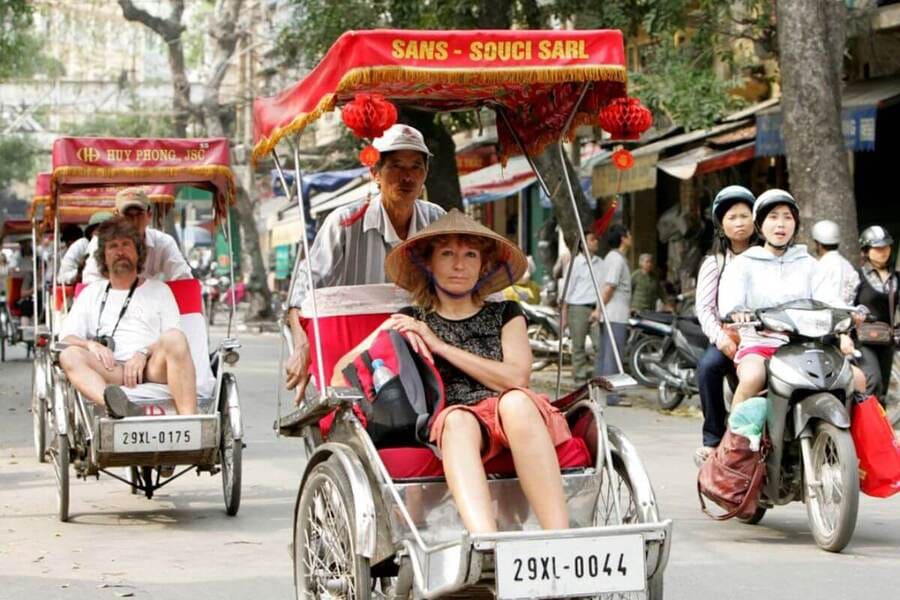
The trade-off is transfer time. Some courses are located well outside central Hanoi, and city traffic can make the journey longer than expected. Travelers should confirm actual driving time from their hotel rather than judging distance from a map.
Northern Vietnam can also be combined with Halong Bay, Ninh Binh or a traditional village visit. These experiences require additional time, so they should be placed between playing days.
Danang and Central Vietnam
Danang is one of the easiest destinations for a first golf trip. Several courses are located along or near the coast, while hotels, beaches and Hoi An Ancient Town are all relatively accessible.

The region works particularly well for couples and groups containing non-golfers. While players are on the course, companions can visit Hoi An, use resort facilities, book a spa treatment or spend time at the beach.
Travelers can stay in Danang, at a coastal resort or in Hoi An. Each option changes the transfer time to the golf courses, so hotel location should be considered before confirming tee times.
Ho Chi Minh City and Southern Vietnam
Ho Chi Minh City provides a lively urban base with access to several courses in and around the wider metropolitan area. It also offers many restaurants, museums, markets and other activities for non-golfing companions.

Traffic is the main planning issue. A course that appears close to the center may still require a lengthy drive, particularly during peak periods. Early tee times can reduce some delays but may require leaving the hotel before breakfast service begins.
Southern Vietnam can be combined with the Mekong Delta or a beach extension, although these should be treated as separate travel experiences rather than short additions after golf.
Phu Quoc
Phu Quoc is suitable for travelers who prefer a resort-based vacation with golf as one component. It is less practical for those who want to play a large number of different courses.

The island is better suited to a slower trip involving the beach, resort facilities and one or two rounds. Its pace can make it a comfortable final stop after a busier journey through Hanoi, Danang or Ho Chi Minh City.
Understand Vietnam’s Regional Weather
Vietnam does not have one uniform golf season. Weather can differ significantly between the north, center and south during the same month.
Northern Vietnam experiences cooler winters and hot, humid summers. Mist or low cloud may affect some mornings during cooler periods, while summer rounds can become physically demanding later in the day.
Central Vietnam has its own rainy and storm-prone period. Coastal weather can change quickly, and strong wind may influence play even when rain is limited.
Southern Vietnam remains warm throughout most of the year. Its wetter season often brings heavy showers, but rainfall may be concentrated into part of the day rather than continuing from morning to evening.
No month guarantees perfect conditions in every region. Check the weather for the specific destinations on your route and allow some flexibility if traveling during a wetter period.
Morning tee times are generally more comfortable in hot weather, but an extremely early round may require a long pre-dawn transfer. The earliest available time is not automatically the most convenient one.
Decide Whether to Bring or Rent Golf Clubs
Bringing personal clubs offers familiarity and consistency, but it also adds logistical work.
Golf bags may be handled differently from standard checked luggage, depending on the airline, ticket type and route. Travelers should confirm baggage allowances directly with each airline before departure, including for domestic flights within Vietnam.
A long international itinerary with several hotel changes can make carrying clubs inconvenient. The vehicle must have enough room for passengers, suitcases and golf bags, which may require a larger car or van.
Rental clubs reduce the amount of luggage but are not always available in every preferred configuration. Golfers should ask about the brand, shaft, handedness and condition of the rental set before confirming it.
Serious players may prefer to bring their own clubs, while occasional golfers playing only one round may find rental equipment more practical.
Reserve Tee Times Before Building the Daily Schedule
Golf should not be added after every hotel and sightseeing activity has already been booked. Tee-time availability can shape the entire day.
First confirm the preferred course, date and approximate playing time. Then build transfers and other activities around the reservation.
A golf day includes more than the round itself:
- Travel from the hotel
- Course check-in
- Changing and preparation
- Warm-up time
- The round
- Showering or changing afterward
- Return transfer
This can occupy six to eight hours even when the course is not particularly far away. Scheduling a fixed city tour immediately afterward creates a risk of missing the departure or rushing through the final holes.
Couples and groups can still arrange dinner or a flexible evening activity after golf. However, the plan should allow for slow play and traffic.
Check What the Green Fee Includes
A quoted golf price may include more than access to the course, but inclusions differ. Before confirming, ask what is covered and what must be paid separately.
Items to clarify include:
- Caddie fee
- Golf cart
- Locker use
- Practice facilities
- Rental clubs
- Shoes or umbrellas
- Meals or refreshments
- Weekend or public-holiday surcharges
- Caddie gratuity guidance
- Return transport
Checking these details makes it easier to compare courses fairly. A lower headline price may become less attractive once transport, equipment and required extras are added.
Golfers should also confirm cancellation and weather policies. Rules may vary according to the course and booking method. Do not assume that rain automatically results in a refund or free rescheduling.
Plan Transfers Around Traffic, Not Distance
Local traffic is one of the most underestimated parts of a Vietnam golf trip. A course may appear only a short distance from the hotel, but the transfer can be affected by congestion, road works or city departure routes.
Ask for an estimated driving time based on the planned day and tee time. Weekend and weekday conditions may differ, and transfers during major holidays can take longer.
Build in enough time to arrive without stress. Reaching the course early is preferable to watching the clock throughout the journey.
For small groups carrying several golf bags, confirm the vehicle type. A car that is comfortable for airport transfers without sports equipment may not have sufficient luggage space on a playing day.
It is also helpful to use the same transfer arrangement for the return journey. Trying to find suitable transport outside a distant golf club can be less convenient than pre-booking both directions.
Avoid Playing Immediately After a Long Flight
Arriving in Vietnam and playing 18 holes a few hours later may look like an efficient use of time, but it is rarely the best start to a trip.
International flights, immigration, baggage collection and the journey to the hotel can all be tiring. There is also a possibility that checked golf equipment arrives late or requires additional handling.
Use the arrival day for rest, a short walk and equipment checks. Schedule the first round for the following morning or afternoon, depending on the arrival time.
The same principle applies to domestic travel. Do not arrange an important tee time shortly after landing in another region. Flight delays and road traffic can turn a theoretically possible connection into a stressful one.
A dedicated travel day may appear less productive on paper, but it protects the more valuable parts of the itinerary.
Include Recovery Time Between Rounds
Vietnam’s heat and humidity can make consecutive rounds more tiring than expected, especially for visitors arriving from cooler climates.
Recreational golfers may prefer to alternate playing days with lighter activities. A practical rhythm is golf, cultural day, golf and then leisure or travel. This provides time to recover without creating long gaps between rounds.
Rest days do not need to be filled with demanding excursions. Suitable options include:
- A spa treatment
- A food walk
- A museum visit
- A cooking class
- A relaxed afternoon in Hoi An
- Time at the beach or hotel pool
Drinking enough water, using suitable sun protection and wearing lightweight clothing are also important during warm conditions. Listen to course guidance if play is affected by severe weather.
Think About Non-Golfing Companions
If a partner or friend is not playing, choose accommodation that allows them to spend the day independently.
A remote golf resort may provide excellent access to the course but few alternatives outside the property. A central hotel may be more convenient for the non-golfer but require a longer transfer for the player.
Danang and Hoi An are particularly practical for mixed-interest trips because beaches, spas, restaurants and cultural attractions are located within the wider golf region. Hanoi and Ho Chi Minh City also offer plenty to do, although traffic and course transfers require more planning.
Before confirming each round, decide what the non-golfers will do and how they will get there. They should have genuine choices rather than being left to arrange the day after the golfer has departed.
Include shared sightseeing days as well. The trip should still feel like a vacation together rather than two unrelated schedules based in the same hotel.
Respect Course Etiquette and Local Procedures
General golf etiquette applies in Vietnam, but individual clubs may have their own rules regarding dress, carts, caddies and pace of play.
Check the dress code before arriving. Standard golf clothing is usually the safest choice, but exact requirements should be confirmed with the selected club.
Many courses use caddies as part of the playing experience. Their role may include carrying equipment, reading greens and helping players navigate an unfamiliar layout. Clear, respectful communication makes the round smoother.
Arrive early enough to complete registration and receive instructions without delaying the tee time. If rental equipment is required, allow additional time to check the set.
Policies concerning outside food, on-course payments and gratuities may differ, so ask in advance rather than relying on assumptions from another country.
Common Mistakes First-Time Golfers Should Avoid
Several planning errors appear repeatedly in first-time itineraries:
Booking Too Many Courses
Playing every day leaves little time to experience Vietnam and can become physically exhausting.
Underestimating Transfers
Driving time matters more than the straight-line distance between the hotel and course.
Ignoring Domestic Baggage Rules
Golf equipment allowances should be checked for every flight, not only the international journey.
Scheduling Sightseeing Too Soon After Golf
Rounds and transfers may finish later than expected. Keep the evening flexible.
Selecting Hotels Before Courses
The hotel may be inconveniently located once the golf schedule is confirmed.
Treating All Regions as Having the Same Weather
Conditions differ between Northern, Central and Southern Vietnam.
Forgetting the Needs of Non-Golfers
A good golf holiday should also provide meaningful experiences for accompanying travelers.
Keep the First Trip Manageable
A successful first golf trip to Vietnam does not need to include every major course or region. Two or three well-chosen rounds in one area can provide a better experience than a rushed journey covering the entire country.
Start by choosing the region that suits both your playing preferences and broader travel interests. Confirm realistic tee times, understand what each fee includes and allow enough space for transfers and recovery.
Most importantly, treat Vietnam as more than a collection of golf courses. Time spent exploring its cities, food, history and landscapes will give each round a stronger sense of place - and make the journey more memorable long after the final scorecard has been completed.