

-
Location: Duy Hai, Duy Xuyen, Quang Nam Province, Vietnam
-
Designer: Robert Trent Jones Jr. (RTJ II)
-
Holes: 18 | Par: 71 | Length: 7,000+ yards (championship tees)
-
Opened: September 2019
-
Nearest Airport: Da Nang International Airport (45 minutes)
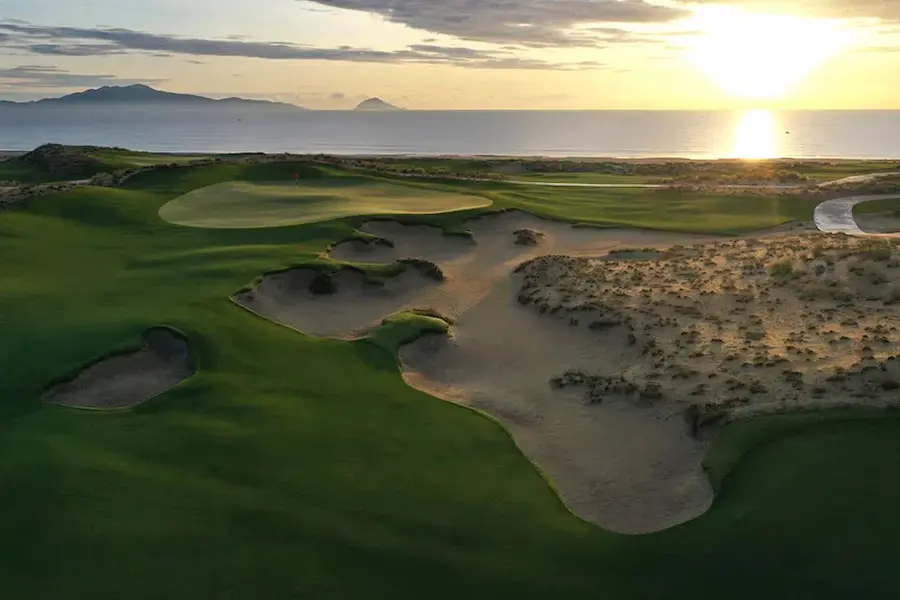
When golfers talk about the best golf courses in Vietnam, one name keeps coming up - Hoiana Shores Golf Club. Sitting on the coastline of Central Vietnam, just 8 kilometres south of Hoi An's UNESCO-listed Ancient Town, this is not just another resort course. It is Vietnam's first - and arguably only - true links golf experience, and it is earning a reputation that places it among the finest in all of Asia.
For international golfers planning a trip to Central Vietnam, skipping Hoiana Shores would be like visiting Scotland and skipping St Andrews. It simply does not make sense.
Who Is Robert Trent Jones Jr., and Why Does It Matter?
Robert Trent Jones Jr. - widely known in the golf world as RTJ Jr. - is one of the most respected golf course architects alive today. His firm, Robert Trent Jones II, LLC, has designed over 270 courses across more than 40 countries, including celebrated layouts in Pebble Beach, Spain, and across Asia.

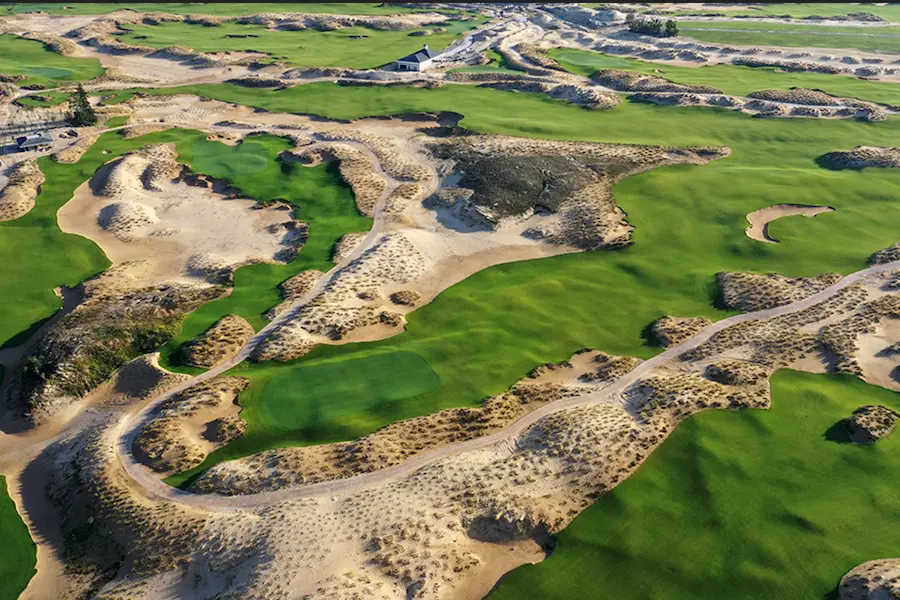
Hoiana Shores is RTJ Jr.'s first course in Vietnam. That alone signals something important: he chose Vietnam, and he chose this particular stretch of coastline, as the canvas for his Vietnamese debut. The result is a course that feels less like it was "built" and more like it was discovered - shaped from dunes, native grasses, and the wind that has swept the coast for centuries.
His philosophy of environmental golf course design is evident at every turn. Rather than reshaping the land, the course flows with the natural dune terrain. Casuarina trees frame several holes, waste areas replace traditional rough, and the course returns twice to the sea, ensuring no golfer forgets where they are.
The Course: What to Expect on the Fairways
A True Links, Not a "Links-Style" Course
There is an important distinction worth making here. Many courses in Asia are described as "links-style" - meaning they borrow some aesthetic elements from traditional links golf. Hoiana Shores is different. Golfers who have played Portmarnock in Ireland, Barnbougle Dunes in Australia, or courses along the Scottish coast consistently report that Hoiana Shores delivers the same fundamental challenge: firm turf, wind-driven shot selection, and greens that punish anything less than precision.
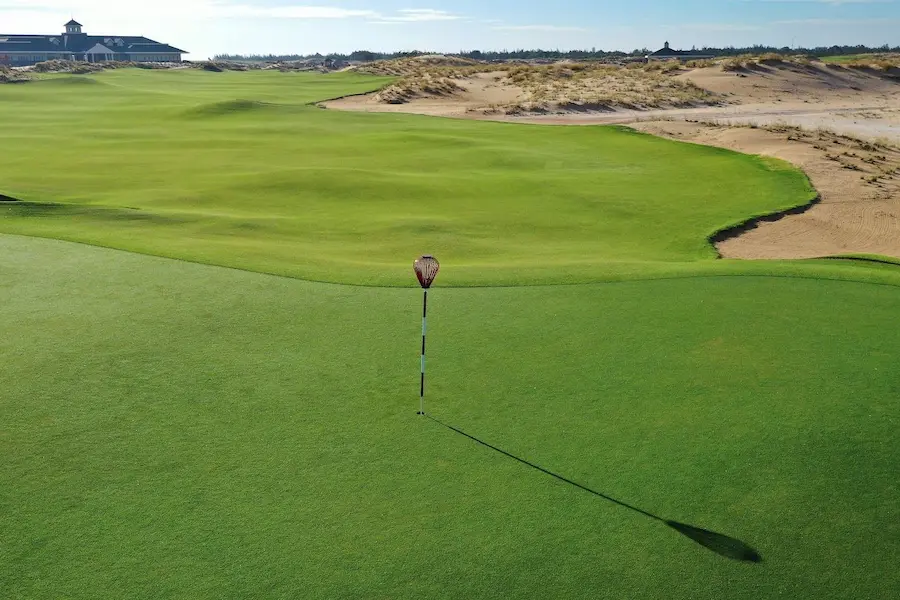
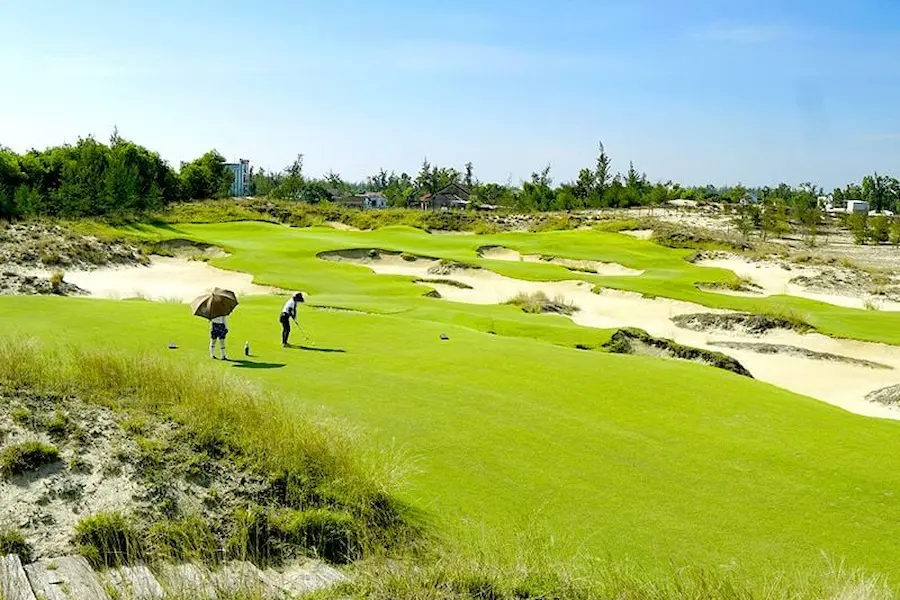
The fairways are wide - generous enough to welcome golfers of all handicaps - but the approach to each green is where the course reveals its character. Undulating putting surfaces, waste bunkers that qualify as natural sand dunes (meaning you can ground your club), and coastal breezes that shift throughout the round demand a full range of shots.
Signature Holes Worth Knowing
-
Holes 15, 16, and 17 form the emotional climax of the round. These three holes run directly along the East Sea, with crosswinds coming off the water and crossing the fairways at unpredictable angles. Club selection becomes a genuine puzzle, and the views - Cham Islands on the horizon, water on one side, sand dunes on the other - are as dramatic as the golf itself.
-
Hole 16 is the course's most talked-about risk-and-reward moment. It is a short par-4 that tempts big hitters to drive the green, but punishes anything short with a near-impossible recovery from the waste bunker. Most golfers take the safe iron off the tee and play a calculated approach. Not everyone can resist going for it, though.
-
The 18th hole brings you back to the clubhouse into the prevailing wind - a fitting, demanding finish that has humbled many a confident golfer on their back nine.
Course Conditions and Grass Types
The course is grassed with TifEagle Bermuda on the greens and Zeon Zoysia across tees and fairways. These selections are deliberate: Zoysia handles the coastal climate well and produces the firm, fast conditions that links golf demands. Greens run at a pace that rewards local knowledge, which is exactly why the caddies here - all trained and course-certified - are worth listening to.
Facilities: A Clubhouse That Belongs in a Different Era
The Hoiana Shores clubhouse is one of the standout features of the entire experience. Reviewers from Australia, the UK, Korea, and the United States consistently describe it as among the finest clubhouses they have encountered in Asia - and it shows.
The 1552 Bistro inside the clubhouse serves international and Vietnamese cuisine in a room that blends colonial-era wood panelling with contemporary comfort. There is a large terrace overlooking both the course and the ocean, ideal for a post-round recap.
-
The Pro Shop: Well-stocked with premium equipment and course merchandise.
-
Locker Rooms: Spacious, modern, and feel closer to a five-star hotel than a golf club changing room.
-
Golf Academy: Available for those who want to sharpen their game before or after a round. The facility includes a 26-bay driving range, an indoor teaching studio, a large practice green, and a full short game area.
Where to Stay: Hoiana Resort & Golf
Hoiana Shores sits within the larger Hoiana integrated resort complex - a $4 billion development spanning 2,400 acres of Central Vietnamese coastline.
-
New World Hoiana Hotel: A five-star beachfront property with contemporary rooms, multiple dining outlets, and direct resort access. This is the most natural choice for golfers staying within the resort.
-
New World Hoiana Beach Resort: The slightly more relaxed sibling property, still five-star, but with a stronger orientation toward beach leisure. Both properties offer Stay & Play packages combining accommodation and tee times at Hoiana Shores.
-
Hoi An Ancient Town: For golfers looking to combine the round with a broader cultural experience, staying in Hoi An town (8 kilometres away) is also a popular option. The ancient town's lantern-lit streets, tailors, riverside restaurants, and cooking schools make it an ideal base for non-golfers in your group - and a rich contrast to a morning on the links.
Practical Information for International Golfers
Getting There: Da Nang International Airport is the gateway, with direct connections from Seoul, Tokyo, Singapore, Bangkok, and several Australian cities. From the airport, Hoiana Shores is approximately 45 minutes by road. Private transfers from the resort or from Da Nang city are the standard option.
Best Time to Play: Central Vietnam has two primary seasons. The dry season runs from roughly February to August, with stable temperatures, clear skies, and ideal playing conditions. The wet season (September to January) brings typhoon risk and heavier rainfall. Most international golf tourists schedule their Central Vietnam golf trip between March and May, when the weather is settled and the heat remains manageable in the morning hours.
Green Fees: Hoiana Shores sits at the premium end of Vietnam's green fee range, reflecting its design credentials and facilities. Expect to pay more than you would at most regional courses - reviewers consistently note it is worth the premium. Booking in advance is strongly recommended, as tee times are limited and the course fills quickly, particularly on weekends.
Caddies: Caddies are mandatory at Hoiana Shores, and this is genuinely an advantage rather than an inconvenience. The caddies are trained, course-knowledgeable, and understand how the wind behaves on each hole throughout the day. Multiple international reviewers specifically praise the caddie experience as a true highlight of the round.
Dress Code: Collared shirts, golf trousers or shorts, and proper golf shoes are required. The dress code is enforced and expected.
How Hoiana Shores Fits Into a Broader Vietnam Golf Itinerary
Hoiana Shores is exceptional, but it is at its best when paired with other courses in the Central Vietnam region to form a complete golf holiday. The Da Nang and Hoi An corridor is home to some of the most concentrated course quality in all of Southeast Asia.
Golfers frequently combine Hoiana Shores with:
-
Ba Na Hills Golf Club - a Luke Donald design set against mountain terrain, offering a completely different character to the coastal links.
-
BRG Da Nang Golf Resort - a Greg Norman layout consistently ranked among Asia's best.
-
Montgomerie Links Vietnam - Colin Montgomerie's Central Vietnamese debut, located close to Da Nang city.
-
Laguna Lang Co Golf Club - a Nick Faldo design 80 km north near Hue, often described as one of the most scenic courses in Asia.
A well-planned four or five-day golf itinerary based in Da Nang can realistically include rounds at all of these, with evenings in Hoi An's old town or Da Nang's beachfront restaurants.
Planning your next luxury golf getaway? To explore itinerary options, green fee packages, and private transfers across all of these world-class courses, see our full guide to Vietnam Luxury Golf Tours.
Final Verdict: Should You Play Hoiana Shores?
For international golfers visiting Vietnam, the answer is unambiguous: yes.
Hoiana Shores Golf Club delivers what very few courses in Southeast Asia can claim - an authentic links experience on a coast that was shaped for exactly this kind of golf. The RTJ Jr. design credential, the natural dune terrain, the coastal wind, the world-class facilities, and the proximity to Hoi An's cultural richness all combine into something that is genuinely hard to find elsewhere in Asia.
It is one of those courses that experienced golfers describe not just as a place they played, but as a round they still think about years later. That is the mark of a truly great golf course - and Hoiana Shores has earned that status.