


A ten-day trip gives golfers enough time to experience more than one region of Vietnam without turning the holiday into a continuous series of flights and hotel changes. The challenge is deciding how many rounds to include, which destinations work well together and where cultural activities should fit into the schedule.
The following itinerary combines four rounds of golf with Hanoi, Halong Bay, Danang, Hoi An and Ho Chi Minh City. Travelers who want to compare sightseeing options or adjust the route around their interests can refer to Vietnam Tour Biz when planning the non-golf portions of the journey.
This route is designed for recreational golfers rather than players trying to fit in the maximum possible number of courses. Golf days alternate with travel and sightseeing, giving players time to recover while allowing non-golfing companions to enjoy the trip as well.
Is Ten Days Long Enough for a Vietnam Golf Trip?
Ten days is enough for a multi-destination golf holiday, but only if the route is planned carefully. Vietnam stretches more than 1,600 kilometers from north to south, so Hanoi, Danang and Ho Chi Minh City should be connected by domestic flights rather than road travel.
Four rounds are realistic within this timeframe. Five or six rounds may be possible, but they leave little room for cultural experiences and make delays harder to manage. Three rounds would create a more leisurely holiday but may feel limited for travelers visiting Vietnam primarily to play golf.
This itinerary includes:
- Two rounds in Northern Vietnam
- One round near Danang
- One round near Ho Chi Minh City
- A Hanoi city experience
- An overnight Halong Bay cruise
- Time in Hoi An Ancient Town
- A short introduction to Ho Chi Minh City
Golf clubs can vary depending on availability, playing preferences and hotel location. The route therefore focuses on geographic areas rather than prescribing a fixed list of courses.
Day 1: Arrive in Hanoi
The journey begins in Hanoi, Vietnam’s capital and a convenient base for several golf courses in the north.
After an international flight, the first day should remain light. Airport transfers can take longer during busy traffic periods, and attempting to add a formal tour usually creates unnecessary pressure. Check in, rest and take a short walk near the hotel if energy permits.
Travelers staying around Hoan Kiem can explore the lake and nearby streets independently. An early dinner featuring Northern Vietnamese cuisine is a simple introduction to the destination without committing to a long evening.
Golf equipment should be checked after arrival. Confirm that all clubs and travel cases have arrived safely, then prepare the necessary items for the following morning. This avoids dealing with equipment problems just before departure for the course.
For non-golfing companions, the first evening is also a useful opportunity to speak with the hotel or local organizer about their activities during the next day’s round.
Day 2: First Round near Hanoi

The first round should be played at a course within manageable driving distance of Hanoi. Northern Vietnam offers layouts set among lakes, hills and limestone landscapes, but transfer times vary considerably depending on the course and traffic.
An early tee time is usually preferable. Temperatures are often more comfortable in the morning, and players can return to the city with part of the afternoon still available.
Avoid arranging an important sightseeing tour immediately after the round. The exact finishing time may be affected by the speed of play, course traffic and the journey back to Hanoi. A massage, relaxed meal or short walk is easier to manage.
Non-golfing companions have several options while the golfers are away. They may explore the Old Quarter, visit the Temple of Literature, join a market walk or spend time at a spa. If the group wants to see Hanoi together, however, it is better to save the main city tour for the next day.
Day 3: Discover Hanoi’s History and Food
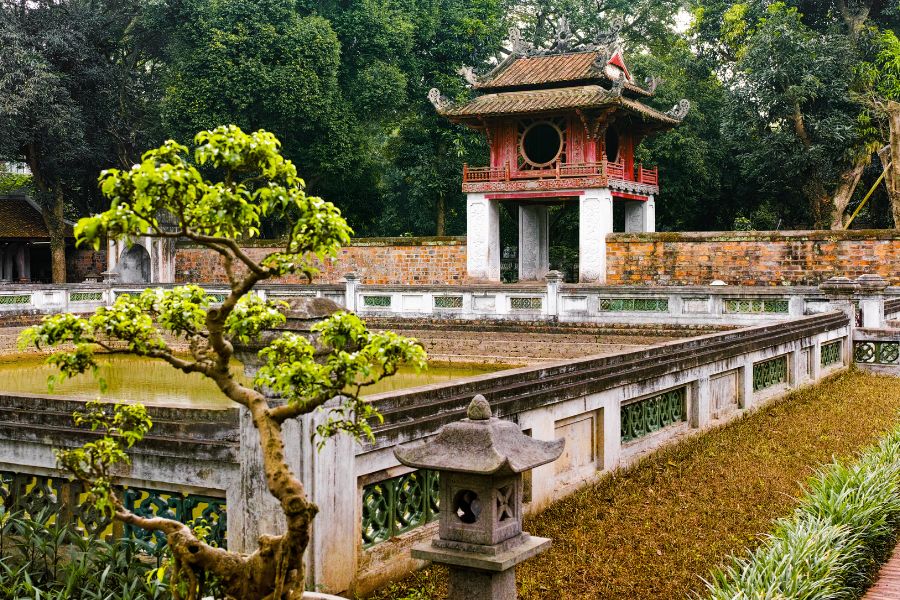
After the first round, Day 3 provides a change of pace and a proper introduction to Hanoi.
A practical route can begin at the Temple of Literature, established in the eleventh century and closely connected with Vietnam’s scholarly traditions. From there, continue toward the French Quarter or visit a museum based on the group’s interests.
The Old Quarter is best explored at walking speed. Its narrow streets reveal a mixture of historic houses, small temples, family businesses, cafés and modern shops. Rather than rushing through every major street, focus on a few areas and allow time for spontaneous stops.
Food should be part of the day rather than an afterthought. Hanoi is known for dishes such as pho, bun cha and banh cuon, but the experience becomes more meaningful when travelers learn how and when local people eat them. A guided food walk can provide this context while introducing places that first-time visitors may overlook.
Keep the evening relatively free because the next morning involves another golf transfer.
Day 4: Second Northern Golf Round
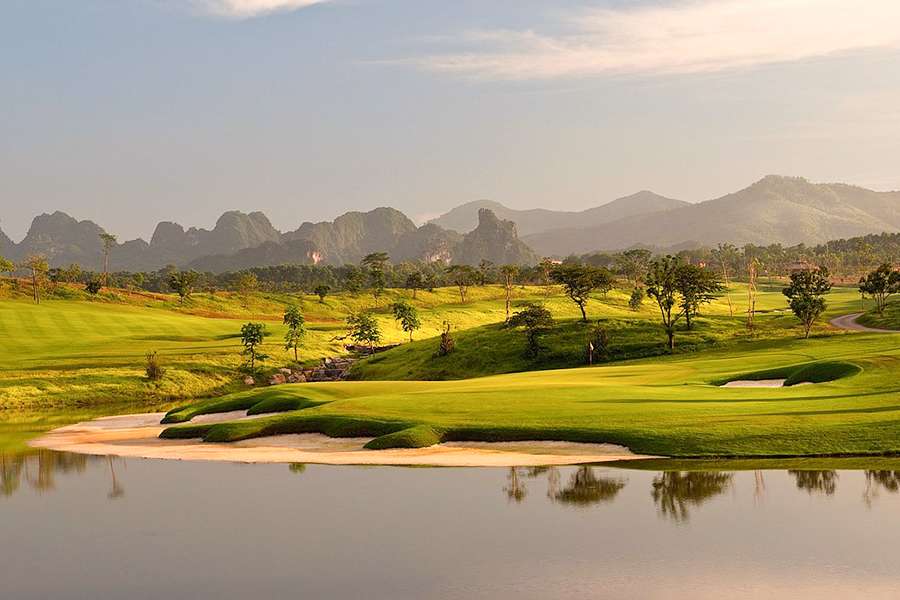
Day 4 includes the second round in Northern Vietnam. Golfers can select a course with a different landscape or playing character from the first.
For example, if the first round took place on a parkland-style course close to the capital, the second could feature more elevation changes, water hazards or mountain scenery. The aim is to experience some variety rather than choosing courses based only on name recognition.
Once again, tee time and transfer duration need to be considered together. A course that appears geographically close may still require a slow journey through city traffic.
After returning to Hanoi, the group should pack for Halong Bay. Only a small overnight bag may be needed if larger luggage can be stored securely at the hotel or transported separately. Keeping the evening simple will make the following departure more comfortable.
Day 5: Travel to Halong Bay
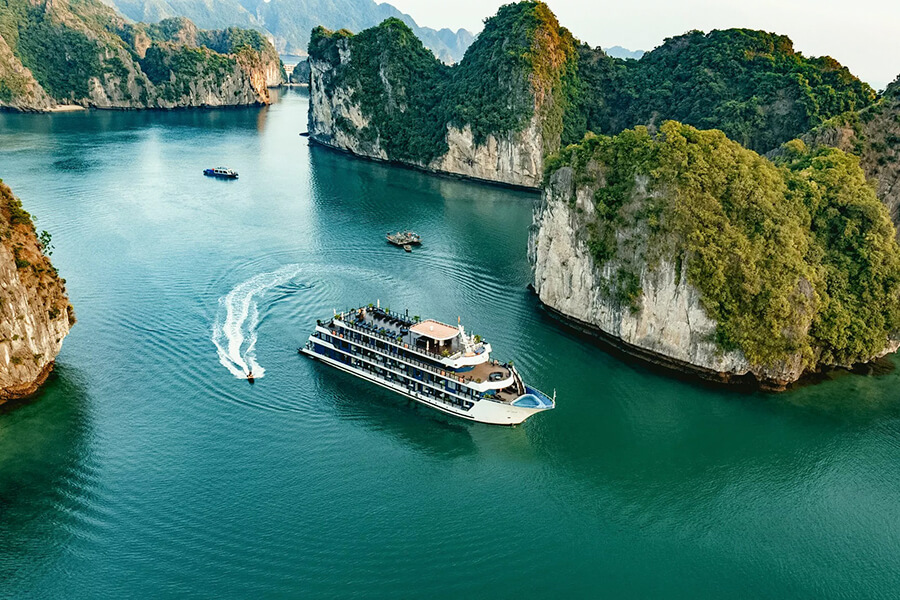
The itinerary moves east from Hanoi to Halong Bay for an overnight cruise. Depending on the departure point and traffic, the road journey generally occupies much of the morning.
Most cruises begin around midday, followed by lunch and an afternoon program. Activities vary but may include visiting a cave, kayaking, traveling by small boat or stopping at a viewpoint. Travelers who prefer a slower experience can remain on board and enjoy the scenery.
Halong Bay is not a golf destination, and that is precisely why it fits well at this point in the journey. After two rounds, the cruise provides physical rest and a completely different setting.
An overnight program is more suitable than a rushed day excursion. It allows travelers to see the limestone formations in the late afternoon and early morning, when the atmosphere can be quieter.
Cruise standards and routes differ, so the lowest price should not be the only consideration. Cabin comfort, transfer arrangements, onboard safety and the number of passengers all affect the experience.
Day 6: Fly to Danang and Continue to Hoi An
The cruise usually concludes by late morning, followed by a road transfer toward Hanoi’s airport for the flight to Danang.
This is the most complex travel day of the itinerary. Cruise arrival, road conditions and domestic flight timing need to be coordinated carefully. A flight that departs too early creates the risk of missing check-in, while a very late flight results in an exhausting arrival.
No golf should be scheduled on Day 6. Even if the timetable appears to leave several free hours, delays in one part of the journey can affect everything that follows.
After landing in Danang, continue to a hotel in Danang, along the coast or in Hoi An. The best location depends on whether the group values quick golf transfers, beach access or proximity to Hoi An’s historic center.
If arrival is early enough, take a short evening walk or have dinner near the hotel. Save formal sightseeing for the next day.
Day 7: Play Golf on the Central Coast

Central Vietnam contains several courses between Danang and the surrounding coast, making it one of the country’s most convenient golf regions.
The landscape is noticeably different from Northern Vietnam. Depending on the chosen course, players may encounter coastal winds, sandy terrain, open views or holes shaped around natural dunes.
A morning tee time allows the group to return to the hotel and rest before visiting Hoi An in the late afternoon. However, travelers should not make a fixed dinner reservation too soon after the expected finishing time. Golf rounds and road transfers do not always end according to the ideal schedule.
Non-golfers can spend the day at the beach, visit a spa, join a cooking activity or explore Hoi An independently. If the whole group wants to experience Hoi An together, they can meet in the old town later.
The central area is especially attractive in the evening, but it can also become crowded. Arriving before sunset provides time to visit historic houses and assembly halls before many daytime attractions close.
Day 8: Hoi An Leisure Day and Flight to Ho Chi Minh City
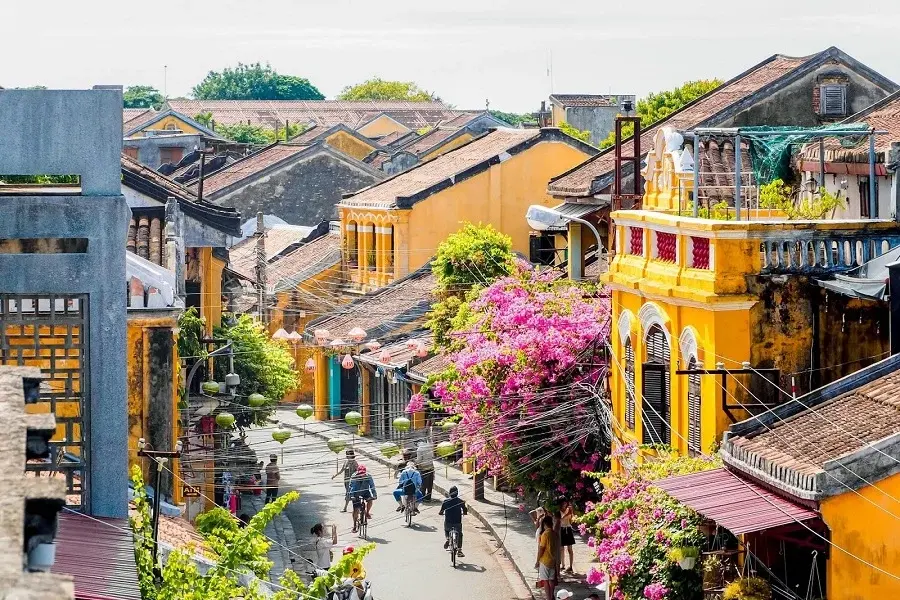
Day 8 begins without golf. Travelers can use the morning to explore more of Hoi An or simply recover before the next flight.
Those interested in local life may cycle through the nearby countryside, visit a workshop or join a short cooking class. Travelers who prefer a quiet schedule can browse the central market, have a long lunch or spend time at the hotel.
The flight to Ho Chi Minh City should be scheduled for the afternoon or early evening. This allows enough time in Hoi An while avoiding an unnecessarily late arrival in the south.
After landing, transfer to the hotel and keep the evening flexible. Ho Chi Minh City is much larger and busier than Hoi An, so the change of pace can feel significant. A short walk near the hotel is enough for the first night.
If possible, stay in an area that provides reasonable access to both the city center and the route toward the selected golf course.
Day 9: Final Golf Round and Ho Chi Minh City Evening
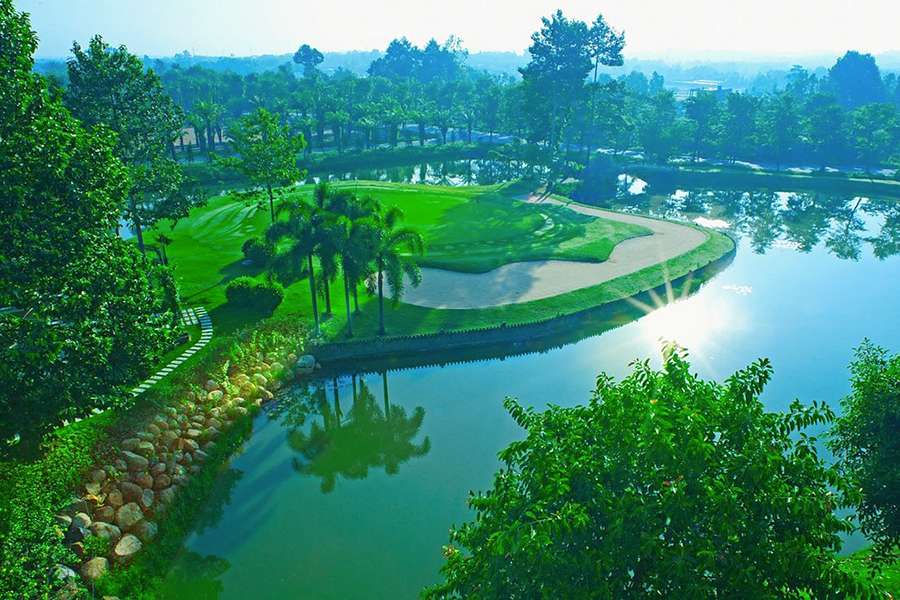
The fourth and final round takes place near Ho Chi Minh City. Because courses may sit outside the central districts, transfer time should be confirmed in advance.
An early start is helpful, particularly during warmer periods. It also creates a better chance of returning to the city before the evening traffic becomes heavy.
The last course should be selected for convenience as well as quality. Choosing a distant club simply to add another famous name may consume most of the day and leave little energy for the final evening.
After the round, return to the hotel for a break before exploring part of the city. Possible stops include the Reunification Palace area, Nguyen Hue Walking Street or a neighborhood known for local dining. A full historical tour would be difficult to fit comfortably, so the evening should focus on atmosphere rather than covering a long attraction list.
Non-golfers can use the day to visit museums, markets or historic buildings before meeting the players later.
Day 10: Departure or Short City Visit
The final day depends on the departure time. Travelers with a morning flight should go directly to the airport, allowing extra time for traffic and checking in golf equipment.
Those leaving later may fit in a short city activity. A museum, market or architectural walk can work, but avoid traveling far from the hotel. Luggage storage and airport transfer arrangements should be confirmed in advance.
If the trip can be extended by one or two nights, Ho Chi Minh City is the most logical place to add time. An extra day could be used for a more complete city tour or an excursion toward the Mekong Delta. Another option is to remain in Central Vietnam longer and include a second coastal round.
How to Make This Itinerary Work Smoothly
A ten-day, three-region golf itinerary depends on good timing. Several practical decisions can make the journey less tiring:
Book Domestic Flights with Sufficient Buffer Time
Do not schedule flights too close to the end of a cruise, golf round or long road transfer. Golf equipment may also require additional check-in time at the airport.
Avoid Changing Hotels Unnecessarily
Use one base in each region whenever possible. Frequent hotel changes create more work without always improving access to the courses.
Confirm Golf-Bag Arrangements
Check airline baggage policies and the vehicle size required for the group. A standard car may not accommodate several passengers, suitcases and full golf bags comfortably.
Keep Some Activities Flexible
Spa visits, local walks and casual meals are easier to adjust than prepaid excursions. Flexible activities are useful after golf days when finishing times may change.
Plan for Non-Golfing Travelers
Give companions clear choices during each round rather than expecting them to wait at the hotel. Hoi An, Hanoi and Ho Chi Minh City all provide enough activities for mixed-interest groups.
Who Is This Journey Best For?
This itinerary suits recreational golfers who want to play in different landscapes while still experiencing Vietnam as a destination. It works particularly well for couples, small groups of friends and travelers accompanied by non-golfers.
It may not suit players whose main goal is to complete as many rounds as possible. In that case, focusing on one region would reduce transfers and allow more time on the course.
For most first-time visitors, however, four rounds across three regions provide enough variety. Hanoi contributes history and Northern character, Halong Bay introduces a natural landscape, Central Vietnam combines coastal golf with Hoi An, and Ho Chi Minh City adds a final burst of urban energy.
The result is a golf holiday that feels connected rather than repetitive. Each round belongs to a different part of the journey, while the cultural and leisure days give travelers a clearer understanding of the country around the courses.